
Stop Water Before It Reaches the Base
Crack filling services for city streets, highways, and municipal roads in Regina, Saskatchewan.
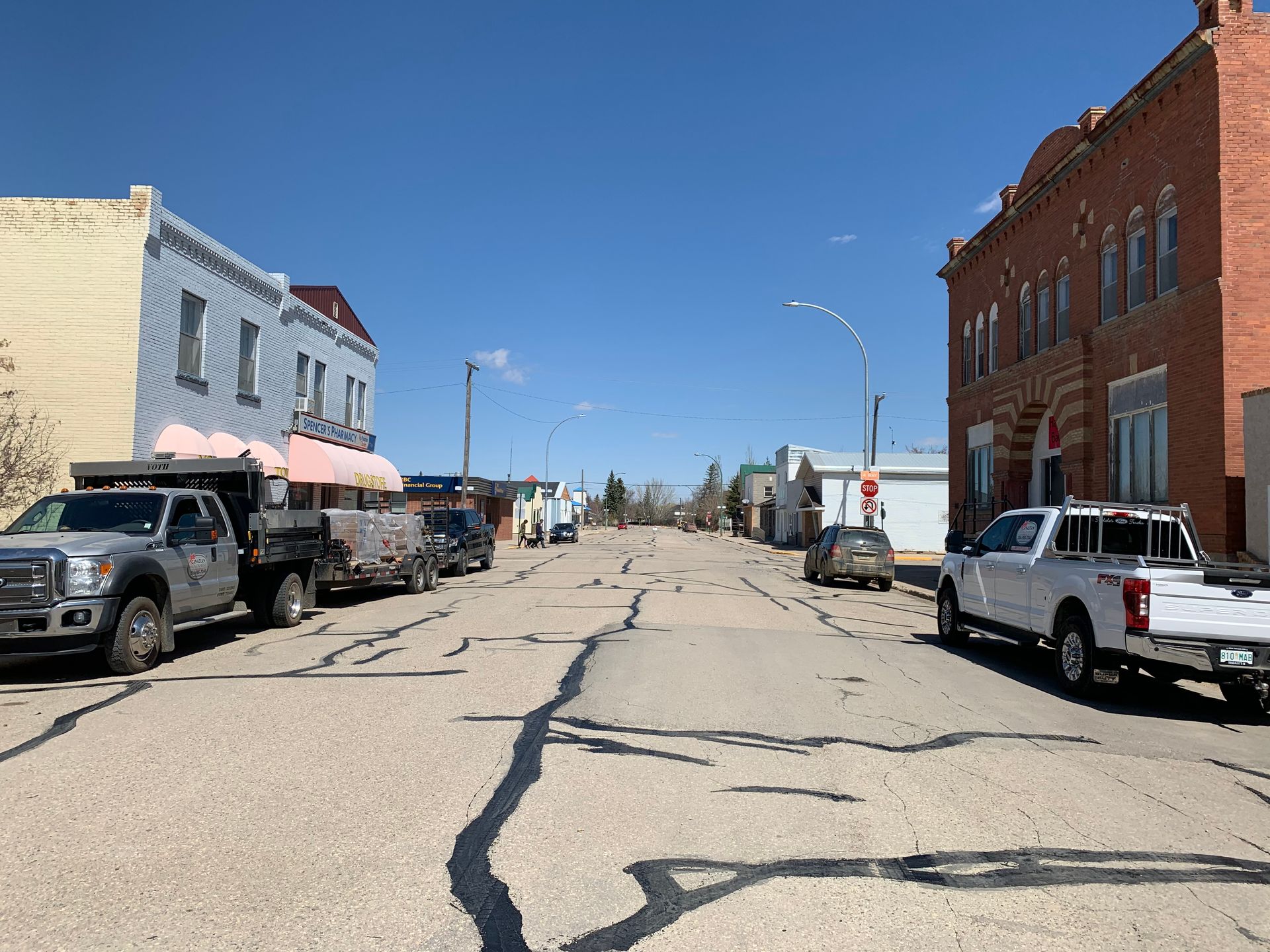
Small cracks in asphalt pavement do not stay small for long in Regina. Water seeps into the crack, freezes during winter, and expands the opening. Over time, the crack widens, the base layer becomes saturated, and the pavement begins to break apart into potholes. Once the base fails, the only option left is full reconstruction, which costs far more than early crack repair. Canadian Paving Services provides crack filling for city streets, roads, highways, and municipal pavement networks throughout Regina and surrounding Saskatchewan communities.
The material used forms a seamless, monolithic waterproofing membrane that remains flexible over a wide range of temperatures. It is impermeable to moisture penetration and can be placed at ambient temperatures as low as negative eighteen degrees Celsius, which extends the construction season and allows repairs to be completed outside the typical paving window. This service is essential maintenance for towns, villages, and rural municipalities managing road budgets and trying to delay costly resurfacing or replacement projects.
If you manage roads or municipal infrastructure in Regina and need to address cracks before they turn into potholes, you can contact Canadian Paving Services to schedule crack filling as part of your maintenance plan.
Crack Filling Works Even in Cold Weather
The crew arrives in Regina with heating equipment, application tools, and flexible crack sealant. The cracks are cleaned to remove dirt, vegetation, and loose debris, then the heated material is poured or injected into the opening. The sealant bonds to the sides of the crack and forms a flexible barrier that moves with the pavement as temperatures change. This prevents water from infiltrating the base layer, which is the main cause of pothole formation.
Once the cracks are sealed, water no longer penetrates the pavement, which stops the freeze-thaw cycle from breaking apart the surface. The repair is flexible enough to withstand expansion and contraction without cracking again, and it remains effective through harsh prairie winters. The sealant is impermeable to moisture and holds up under traffic, which makes it a proven solution for extending pavement life in cold climates.
Crack filling does not restore structural integrity to pavement that has already failed, but it prevents healthy pavement from deteriorating further. It is most effective when applied early, before cracks widen or water reaches the base. The work can be completed quickly with minimal disruption, and the treated surface is ready for traffic as soon as the material has cooled and set.
These are the questions municipalities ask most often
Crack filling is a straightforward process, but there are common questions about timing, materials, and what the service actually prevents. The following answers cover the details that come up during planning and budgeting.
Yes, the material is designed to handle traffic and remain flexible under load. It is commonly used on driveways, city streets, roads, highways, and municipal pavement networks throughout Regina and surrounding areas.
If your municipality or road network in Regina is showing early signs of cracking, addressing it now can prevent water damage and extend the life of the pavement. Reach out to Canadian Paving Services to schedule crack filling and discuss seasonal maintenance options.